Your front desk is open for 8 hours. Your customers are awake for 24
· 12 min read
Most enquiries that matter arrive when nobody is at the desk. How to map your day, decide who answers, and write the rules down.
Here is a short scene. It is hypothetical, but most owners will recognise it.
It is 7.10pm on a Thursday. A woman has finished work, fed her children and finally sat down with her phone. She needs a plumber for Saturday, a dentist for next week and a quote for school uniforms. She rings three businesses. Two ring out. One plays a message saying the office is open from 9am to 5pm. She tries a fourth, which picks up, answers her question and books her in. By the time the first three open on Friday morning, the work has gone.
None of the three businesses did anything wrong in the ordinary sense. They were closed, as they always are at 7pm. The problem is that their customers were not closed. This article is about the gap between the hours a business is staffed and the hours its customers are trying to reach it, and about a simple way to decide who answers in each part of the day without hiring another person.
Draw your day as a clock
The first step is to stop thinking about “opening hours” and start thinking about the whole day as twelve two-hour blocks. That sounds trivial. In practice it changes the conversation, because it makes the unstaffed hours visible.
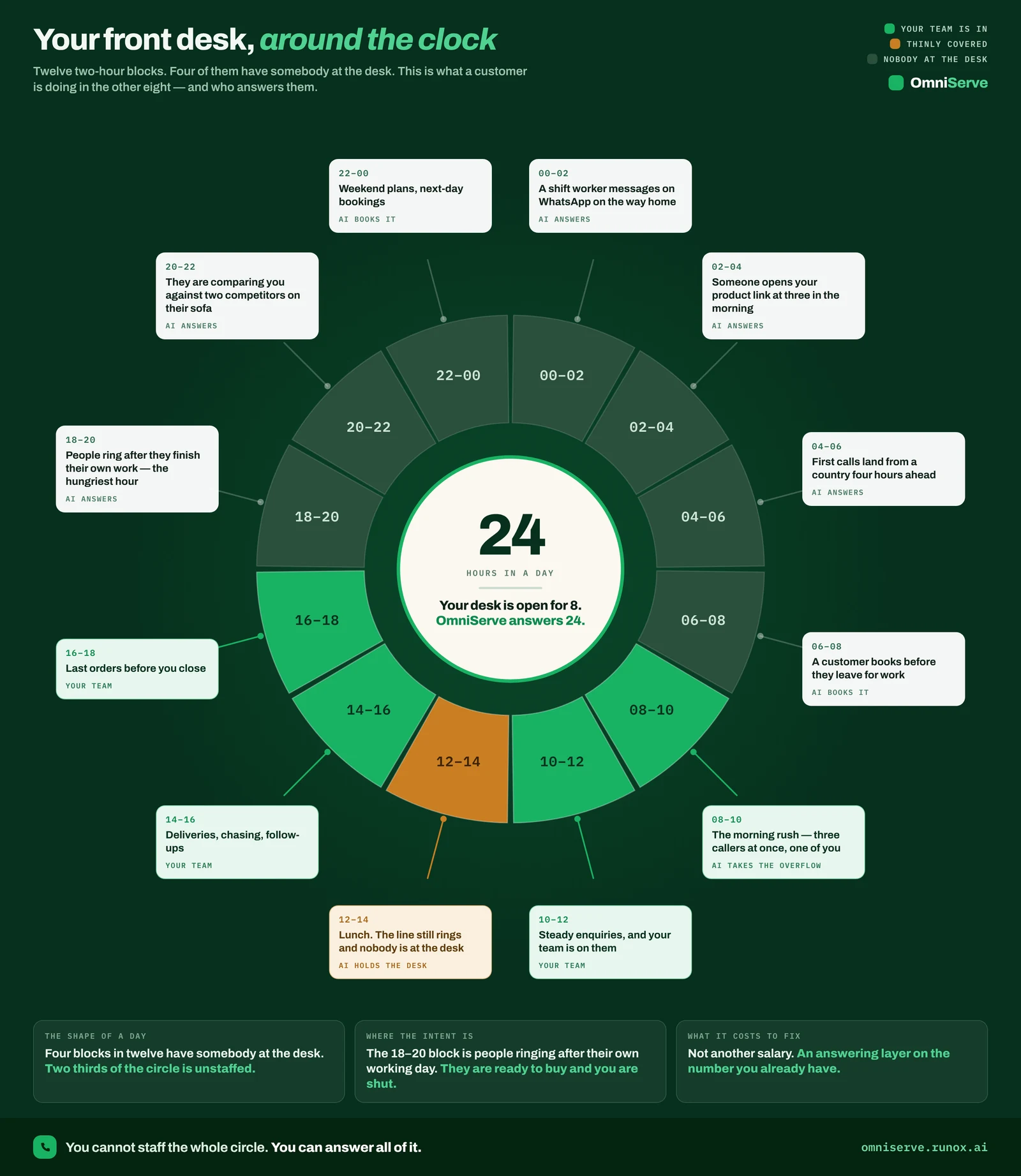 Figure 1: Your front desk, around the clock. Notice how much of the circle is dark, and what customers are doing in those hours.
Look at the colours in Figure 1 before reading any of the labels. Only four blocks, from 8am to 4pm and then 4pm to 6pm, are green. The lunch block from noon to 2pm is amber: somebody is technically in, but the line still rings while they eat. Everything else, two thirds of the circle, is dark.
Now read the labels around the edge. They describe ordinary behaviour, not unusual demand:
- 06:00 to 08:00: a customer books before leaving for work.
- 08:00 to 10:00: the morning rush, with three callers at once and one of you.
- 12:00 to 14:00: lunch, and the line still rings with nobody at the desk.
- 18:00 to 20:00: people ring after they finish their own work. The figure calls it “the hungriest hour”.
- 20:00 to 22:00: they are comparing you with two competitors from the sofa.
- 00:00 to 04:00: a shift worker messages on WhatsApp on the way home, and someone opens your product link at three in the morning.
- 04:00 to 06:00: the first calls arrive from a country four hours ahead.
The point of the picture is not that every block is equally busy. It is that the blocks with the strongest buying intent are often the ones you have chosen not to staff. The 6pm to 8pm block in particular is full of people who are ready to decide and who have only just got the time to do it.
Draw your own version this week
You do not need the figure to do this exercise. Take a sheet of paper and draw twelve segments. Then:
- Shade the blocks where a named person is at the desk and able to answer at once.
- Mark the blocks where someone is in but is busy with something else, such as lunch, deliveries or a meeting.
- For every other block, write down what currently happens when a customer calls or messages. Be specific: voicemail, ringing out, an automatic WhatsApp reply, nothing.
Most owners find that the third list is longer than they expected, and that “voicemail” is doing more work than they realised. Very few customers leave a voicemail and then wait patiently for a call back.
The real question is who answers
Once the clock is drawn, the instinctive response is to look at the dark segments and think about staff: an evening receptionist, a weekend rota, a night shift. For most small businesses that is not affordable, and it is not necessary either. The better question is not “who is at the desk” but “who answers, and what are they allowed to do”.
In most small businesses the honest answer is that there is one tier, and it is the owner. A more workable arrangement has three:
- The first answer picks up straight away, in every channel, at every hour. It answers what is already written down, takes the name, number and reason for the enquiry, and books into the diary within rules you have set.
- The person on duty is whoever is on the rota at that moment, at a desk, on a mobile or at home. They take the judgement calls: the apology, the negotiation, anything sensitive. They should pick up the conversation with everything the customer has already said in front of them.
- You, the owner, set the rules, look at the pattern each week, and take the few calls that only you should take.
The cost of each tier explains why so many owners end up as the front desk. One more conversation handled by the first answer costs very little. One more person on duty costs a salary. There is only one of you. Answering the phone yourself feels cheap because you are not paying yourself by the hour, but it is the most expensive option you have: every hour spent on opening hours and directions is an hour not spent on the work only you can do.
When the tiers blur
Three failures come up again and again. They are worth checking against your own business:
- The first answer is asked to decide. It quotes a price you never agreed, and you either honour it or have an awkward conversation.
- A person handles what the first answer could have. Your best people spend the morning on opening hours and directions.
- You become the front desk. The founder answers the phone, and the business stops growing.
The first failure is the one people worry about most with AI, and rightly. The protection is not to avoid AI but to be clear about its limits: it answers from your own material, and when it does not know, it says so and passes the customer to a person. The second and third failures are much more common in practice, and they are failures of having no first tier at all.
What a first answer has to do
If you are going to put something in the first tier, whether a person, an answering service or an AI receptionist, it helps to have a short list of what “good” looks like. Adverts for answering tools tend to compress that list into a few lines, and it is worth reading those lines critically.
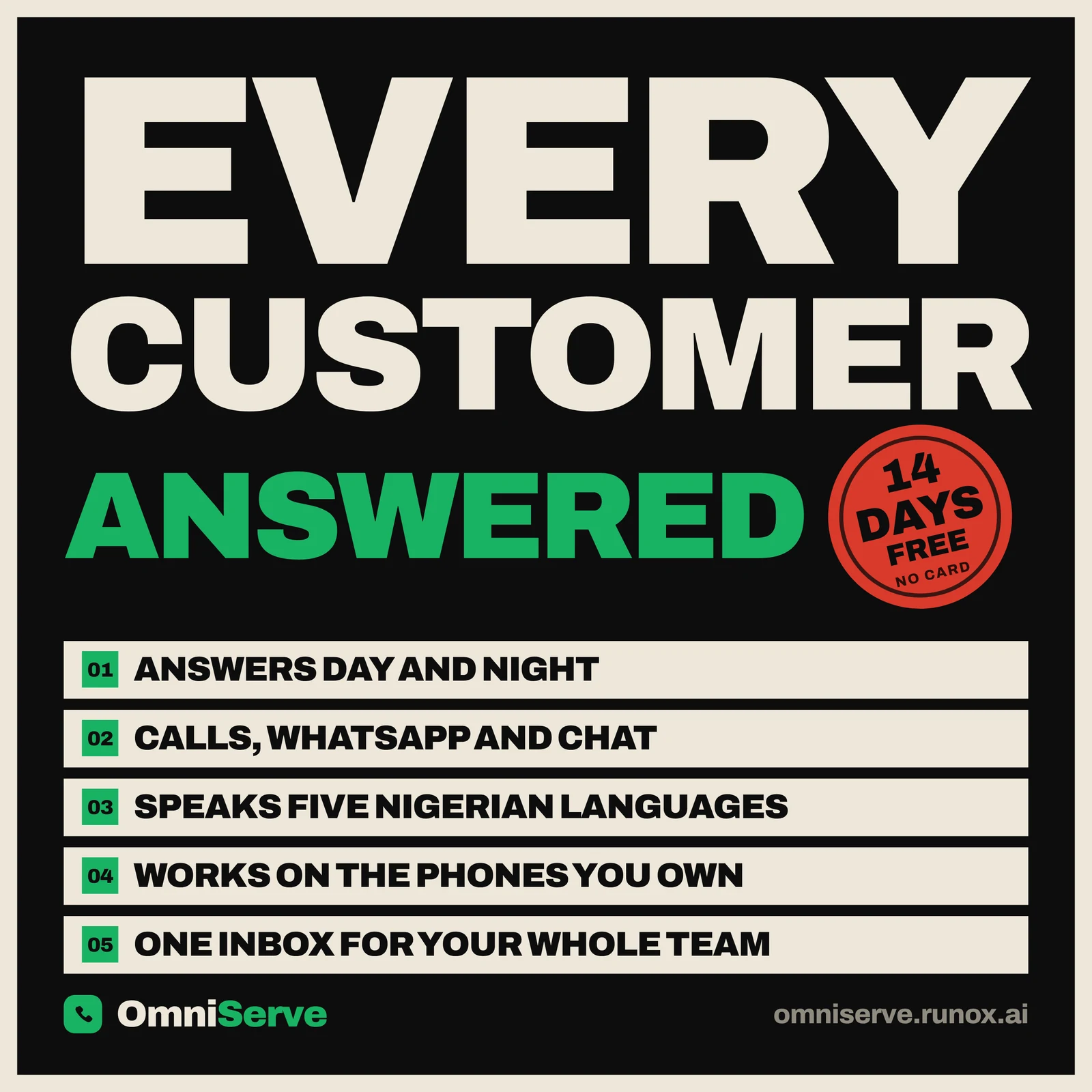 Figure 2: Every customer answered. Read the five numbered lines as a checklist for any first tier, then ask which of them are true today.
Figure 2 lists five promises. Each one maps onto part of the clock in Figure 1, and each one is a question to put to any supplier, including us.
01: Answers day and night. This is the whole point of the dark segments. Ask what actually happens at 3am: does the customer get an answer, a booking, or only a message saying someone will call back?
02: Calls, WhatsApp and chat. Customers do not choose the channel you would prefer. The shift worker in the 00:00 block of Figure 1 sends a WhatsApp message; the person comparing you from the sofa uses web chat; the caller at 7pm rings. A first tier that covers only one of these leaves the others dark.
03: Speaks five Nigerian languages. Language matters, particularly for businesses whose customers are more comfortable in Pidgin, Yoruba, Igbo or Hausa than in English. It is also the line to check most carefully with any supplier. Ask which languages are live today and which are still being tested, and try each one yourself before you rely on it. For OmniServe, as at October 2026, the AI answers in English and the other languages are in testing.
04: Works on the phones you own. A first tier should fit around the numbers, lines and handsets you already have, rather than forcing you to change them. If moving to a new system means reprinting every van and invoice, it will not happen.
05: One inbox for your whole team. When the first tier hands over, the conversation has to land somewhere the person on duty will see it, together with everything already said. If calls go to one place, WhatsApp to a personal phone and web chat to an email nobody reads, the handover fails even when the first answer was good.
The stamp in the corner, “14 days free, no card”, is a reminder that a first tier is easy to test before you commit. The useful test is not a demonstration but a week of your own dark segments.
Write the line down
The three tiers only work if the line between them is written down. The first answer answers. The person on duty resolves. You decide what either of them is allowed to promise, once, in writing, instead of forty times a day.
That sentence is the practical heart of this article. Before you change any software, write a one-page answering policy. It does not need to be formal. It should cover:
What the first tier may do on its own. For example: answer questions about hours, prices on the published list, delivery areas and returns; take name, number and reason; book standard appointments into free slots.
What it must never do. For example: agree a discount, promise a delivery date that is not in the system, discuss a complaint about a named member of staff, or give anything that sounds like medical, legal or financial advice.
When it must hand over. For example: the customer asks for a person; the customer is upset; the question involves money already paid; the AI does not know the answer.
Who receives the handover, and when. For each block on your clock, name who is on duty. Outside those blocks, decide what the customer is told: a call back time, a booking for a call, or a message that will be picked up first thing.
The limits of the person on duty. For example: refunds up to a set amount, a goodwill gesture up to a set value, anything above that goes to you.
How often you read the log. Weekly is enough for most businesses. You are looking for questions that came up more than once and were not answered well.
Once this page exists, it can be given to a new member of staff, to a temporary cover person, or to an AI receptionist. The same rules apply to all of them.
Ring on the phones you already have
A common objection to answering outside office hours is practical rather than strategic: “I am not sitting at the desk at 7pm, so how would I even know the phone is ringing?”
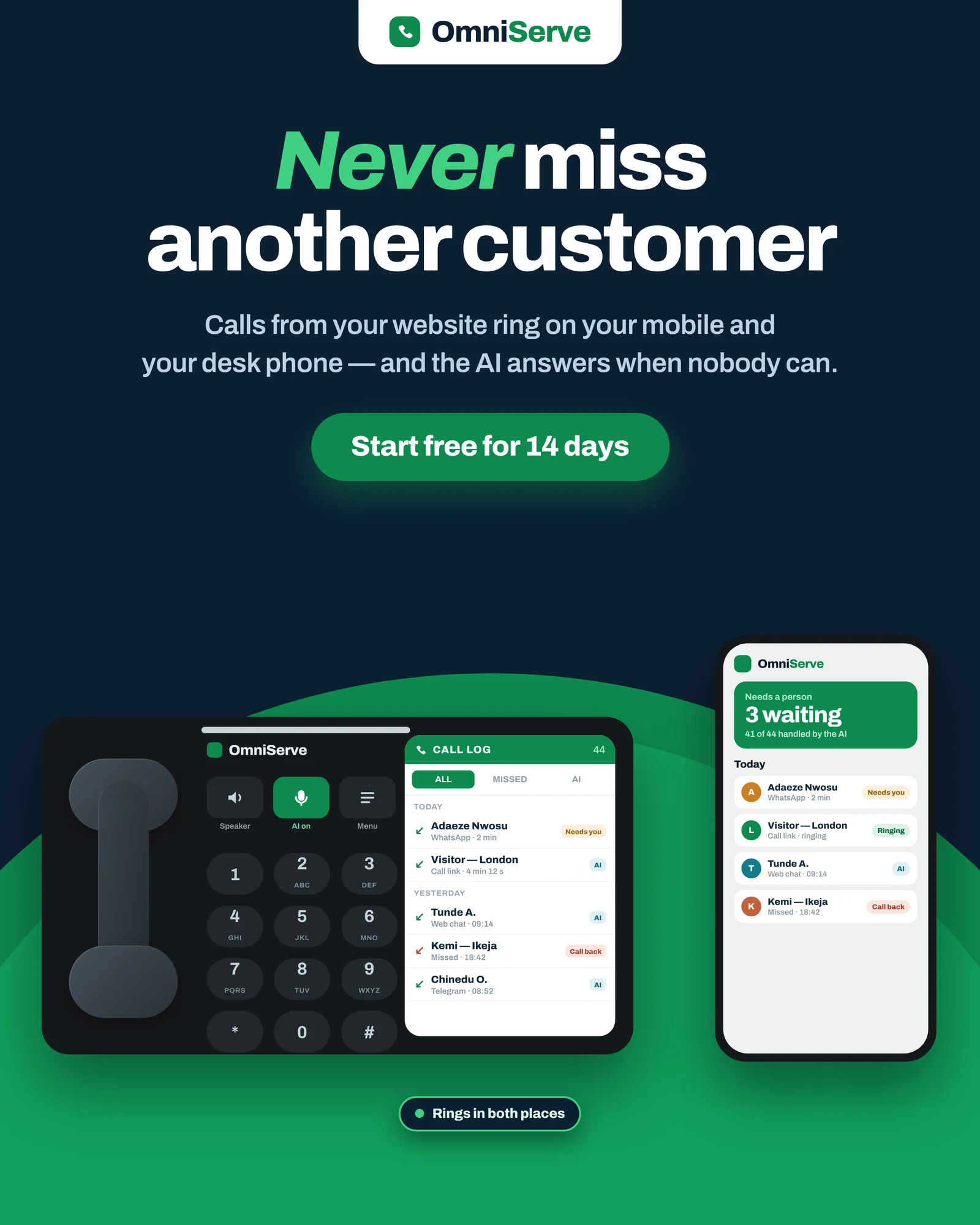 Figure 3: Never miss another customer. The mobile on the right shows the view that matters out of hours: the conversations waiting for a person, and the ones already handled.
Figure 3 shows the answer in two devices. On the left is a desk phone with a call log, split into all calls, missed calls and those the AI took. On the right is a mobile showing a short list headed “Needs a person”, with each conversation labelled by channel: WhatsApp, a call link from a visitor in London, web chat, and a missed call marked “call back”.
What to notice is the triage, not the hardware. Out of hours, the person on duty should not be looking at every conversation. They should be looking at the small number the first tier has flagged as needing a human. Everything else has already been answered, booked or logged. That is the difference between being “on call” in a way that ruins your evening and being on duty in a way that takes ten minutes.
If you do not use any software at all, you can still copy the principle. Agree that the person on duty only deals with three kinds of message after hours: complaints, urgent problems and anything involving money. Everything else gets a holding reply and is handled in the morning.
Holidays are the clock at its worst
The clock in Figure 1 describes an ordinary weekday. Public holidays make the dark part bigger, often for several days in a row, at exactly the time many customers have free time to deal with their own errands.
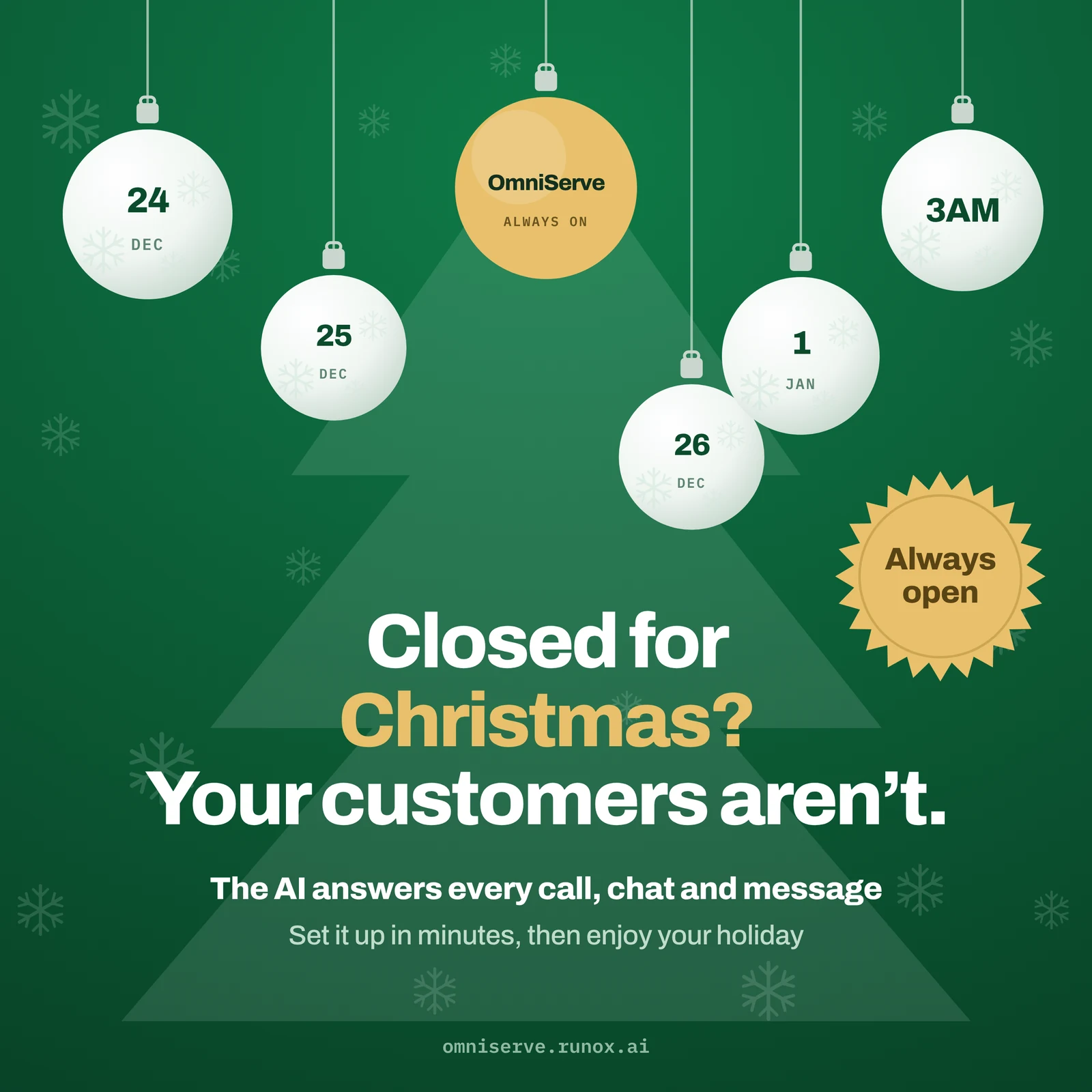 Figure 4: Closed for Christmas? Your customers aren’t. The baubles mark the dates when most front desks are empty.
Look at the baubles in Figure 4: 24 December, 25 December, 26 December, 1 January and “3AM”. Together they describe the stretch when most small businesses are closed or half-staffed, and when customers are still browsing, comparing and booking for the new year.
In England and Wales the official bank holidays this year fall on Friday 25 December, Monday 28 December (the substitute day for Boxing Day, which falls on a Saturday) and Friday 1 January 2027 [1]. Many businesses close for the whole period between them. Other countries have their own dates, but the pattern is the same: a long run of dark segments, just as many customers have time on their hands.
A holiday cover plan in five steps
Whether or not you use an AI receptionist, write a holiday plan by the end of November:
- List the dates you are closed. Include the half days either side.
- Decide what customers are told. A clear message with the date you reopen is far better than a phone that rings out.
- Decide what can still be done. Bookings for January, quotes for new work and answers to common questions can usually carry on without anyone at the desk.
- Name one person on duty for true emergencies. Agree what counts as an emergency, and keep the list short.
- Plan the first morning back. Block out time to work through anything left waiting, starting with the oldest.
Your one-week plan
Here is a practical sequence you can follow this week, with no new software.
- Monday: Draw your clock. Shade the staffed blocks and write down what happens in every other block.
- Tuesday: Ring your own business at 7pm and again at 12.30pm. Note exactly what a customer hears.
- Wednesday: Write your one-page answering policy, using the headings in the “Write the line down” section above.
- Thursday: Draw up a duty rota for the coming month, including who covers lunch and who is on duty out of hours for urgent matters only.
- Friday: Write your holiday cover plan and put your reopening dates on your website.
At the end of the week you will have a clear picture of which hours are lost to you, and a written set of rules that anyone, human or AI, could follow.
Where OmniServe fits
OmniServe is built to be the first tier described above.
The AI receptionist answers calls, call-link calls, WhatsApp, Telegram and web chat. It learns from your own website and documents, so it answers with your prices, hours and policies rather than general knowledge. Handover rules let you set when it should pass a customer to a person, and conversations go to whoever is on duty or next in turn, with the transcript attached so the customer does not repeat themselves.
The AI can book free times into your diary from calls, chats and email, using booking pages, appointment types and calendar sync with Google and Outlook. Reports show after-hours calls, unanswered and lost calls, and the questions the AI could not answer, which is the log you read each week as the owner.
Calls from your call link can ring your mobile in the app and your desk phone; ringing several phones at once is currently in testing. The AI answers in English today, and Pidgin, Yoruba, Igbo and Hausa are in testing as at October 2026. Plans start with a 14-day free trial and no card is needed. The simplest test is to draw your clock, switch the AI on for the dark blocks only, and read what it handled after one week.
Answer every customer, on every channel. See how OmniServe runs your front desk: omniserve.runox.ai
Sources
- GOV.UK, “UK bank holidays” (England and Wales: 25 December 2026, 28 December 2026 substitute day, 1 January 2027). https://www.gov.uk/bank-holidays